
Estimated Reading Time 18 minutes
Key Takeaways
- AI belongs in the enrollment and student-success stack now: 24/7 support, smarter triage, and policy-aligned actions that protect data and staff time.
- Start with an ai chatbot for education for Q&A and routing; layer a full ai agent for education to execute multi‑step workflows across your SIS, LMS, CRM, and success platforms.
- Governance matters: treat agents like enterprise systems—pilot first, enforce RBAC/SSO, and maintain auditable actions and knowledge change logs.
- Choose vendors with robust RAG + citations, guardrails, interoperability, privacy controls, and analytics that map to yield, retention, and equity metrics.
- In 90 days, you can run a focused pilot, measure FCR/deflection/CSAT, validate safety and equity, and build a scale plan.
Why AI agents now belong in your student‑success and enrollment stack
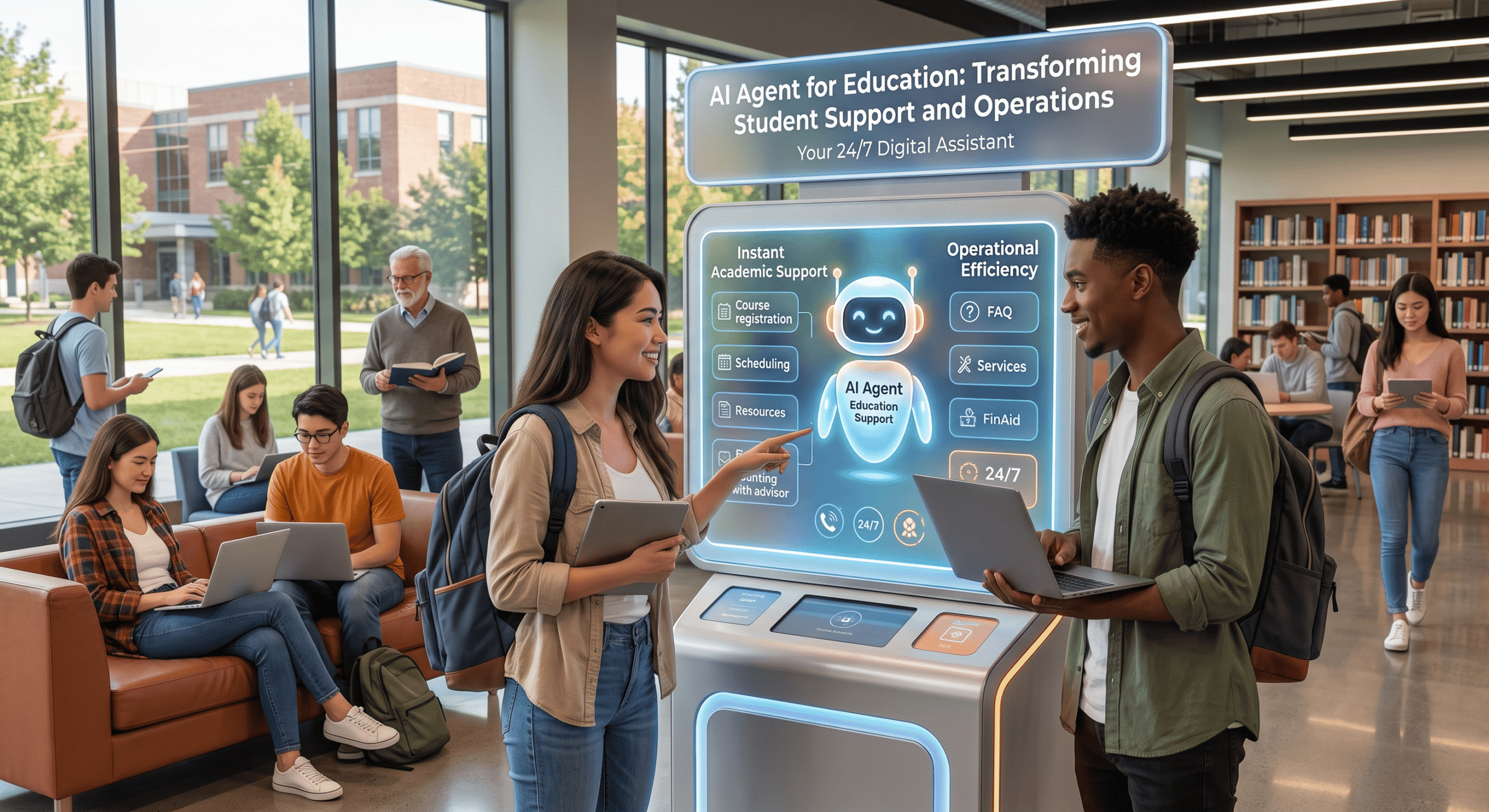
Resources are tight, complexity is rising, and leaders must deliver integrated, data‑driven support without burning out teams. An ai agent for education layers onto your CRMs, enrollment management, student‑services, and success platforms to provide 24/7, multilingual answers, personalized nudges, and workflow automation—while escalating complex cases to humans with full transcripts and context.
Equity improves when services go always‑on, mobile‑first, and multilingual; commuters, caregivers, and working students get the same support after hours. Implemented with FERPA‑aligned guardrails, institutions see lift in first‑contact resolution, time‑to‑answer, and completion of key milestones.
Sources: TECH Sector Brief Q1 2025 · HEP: Reaching Higher Ed 2026 · Guideflow overview · WorldMetrics rankings · WaitWell comparison · Syracuse example
What is an AI agent for education? How it differs from an education AI chatbot
Definition: ai agent for education (education ai agent)
A goal‑oriented software entity that can plan and execute multi‑step tasks aligned to institutional policy. Typical capabilities: RAG‑based retrieval with citations, policy‑aware reasoning, API/tool calls (create tickets, schedule advising, submit forms), multi‑session memory, and human handoff with transcripts—all within scoped permissions and audit logs across SIS, LMS, CRMs, student success, and queue systems.
Definition: education ai chatbot (ai chatbot for education)
A conversational interface optimized for Q&A and triage. It answers 24/7, routes to humans when needed, but usually does not orchestrate complex, multi‑system workflows autonomously.
- Where each belongs
– Chatbot = 24/7 answers + triage (program FAQs, deadlines, routing).
– Agent = triage + actions (queue placement, appointment booking, form filing, compliant messaging, ticket creation).
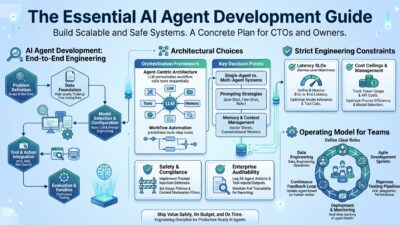
Architecture overview for leaders
For a succinct blueprint that boards and committees can read, see: Architecture overview for leaders.
- Knowledge and reasoning — Curated, versioned KB (catalog, aid, policy); RAG with source citations in every answer; confidence thresholds route to humans.
- Integrations and tool use — Connectors to SIS, LMS, CRM, student success, queue systems; role‑based, least‑privilege tokens; PII redaction for FERPA.
- Guardrails and safety — See guardrails and safety: prompt libraries, toxicity filters, PII handling, hallucination controls, human‑in‑the‑loop, full audit trails.
- Analytics and observability — See analytics and observability: dashboards (deflection, CSAT/NPS, FCR, TTA), convo review, drift and safety monitors.
Governance implications
Because agents can “act,” they require stronger data governance and change control than basic chatbots. Align with committee governance, rational decision frameworks, and a pilot‑first culture. Map approvals to enterprise norms; topical committees vet needs, IT advisory prioritizes, and taskforces define scope, evaluation guides, and pilots before scale‑up. Reference: governance implications.
Sources: ERIC: EdTech Governance · Complete College America procurement guide
High‑impact, student‑centric use cases across the lifecycle
Recruitment and admissions: ai agent for education
- Automate now — Prospect FAQs; campus/program matching; RSVP/visit scheduling; app requirements with nudges; handoff to recruiters for qualified leads.
- Integration — Connect to CRM (Slate/Salesforce) for capture/routing; chatbot for FAQs; agent to trigger CRM tasks, log interactions, schedule appointments.
- Why it matters — Always‑on responsiveness reduces drop‑off; recruiters focus on complex conversations.
Sources: WaitWell · WorldMetrics
Enrollment and onboarding: education ai agent
- Automate now — Document coaching; housing/orientation booking; placement testing guidance; personalized tuition/aid explainers; initiate forms, schedule orientation, open tickets, push checklists.
- Integration — Connect to enrollment software for status/orchestration; tie into SIS for holds/placements; sync orientation/event systems.
- Why it matters — Faster time‑to‑enroll; fewer incomplete files; reduced melt.
Sources: Guideflow
Student services front door: ai chatbot for education + queue orchestration
- Automate now — Live triage; virtual queue placement; real‑time wait visibility; reminders to reduce no‑shows; policy‑aligned self‑service.
- Integration — Connect queue/appointment systems; pass context to staff consoles.
- Why it matters — Shorter lines, fewer repeats, cleaner handoffs improve CSAT and reduce workload.
Sources: WaitWell
Advising and student success: chatbot + agent actions
- Automate now — Early‑alert nudges; appointment scheduling; success‑plan reminders; degree progress Q&A with catalog citations; drop/add coaching.
- Integration — Student success platforms (alerts/notes/caseloads); calendar sync.
- Why it matters — Faster interventions and clearer wayfinding drive persistence.
Sources: Syracuse example
Equity and accessibility: ai chatbot for education
- Implement — Multilingual UI/content; mobile‑first; SMS/web/kiosk channels; WCAG‑conformant UI; transparent escalation for sensitive topics.
- Why it matters — Barriers drop for working students, commuters, caregivers, and students with disabilities.
Sources: KCCD Student Services · ERIC accessibility
Technical integration blueprint an EdTech director can defend in committee
Below is an enterprise-grade blueprint you can tailor to your environment.
- Systems of record and action — SIS (enrollment, holds, degree audits); LMS (courses/dates/grades context); CRM (recruitment funnel); student success (alerts/advising); queue/appointments (check‑in, wait visibility, calendars).
- Identity and access — SSO (SAML/OIDC), MFA for staff; RBAC and scoped tokens; consent, minimization, and audit trails for every action.
- Data and knowledge — RAG over curated, versioned policy/catalog/FAQs; change logs; FERPA‑aware redaction; low‑confidence “don’t know” + escalation.
- Observability and safety — Version‑controlled prompts/config; regression tests; injection/toxicity filters; drift and safety monitoring; secure logging with PII controls.
- Governance fit — Map to LMS/enterprise approval processes; align vendor roadmaps to institutional strategies.
Sources: Guideflow · WaitWell · ERIC governance · CCA procurement
Evaluation framework: How to choose the best chatbot (and when to deploy a full agent)
Use this outcomes‑first rubric; see also: how to choose the best AI chatbot for education.
- Student outcomes — CSAT/NPS; FCR/deflection; time‑to‑answer; completion of FAFSA/orientation/registration; early yield/retention indicators.
- Capability checklist (chatbot) — RAG + citations; confidence thresholds; human fallback; multi‑turn memory; multilingual parity; omni‑channel (web/SMS/LMS/kiosk); live‑agent handoff w/ transcripts; accessibility (WCAG 2.2); guardrails; analytics; content lifecycle.
- Integration & interoperability — Native connectors/APIs for SIS/LMS/CRM/success/queue; webhooks; SSO; data‑warehouse export.
- Compliance & risk — FERPA alignment; PII redaction; retention; SOC 2/ISO 27001; AI risk documentation.
- TCO — Licensing + usage; implementation/integration services; content ops; training/change management; ongoing tuning and governance.
- When to choose a full agent — If you need policy‑controlled actions across systems, automated workflows with audit trails/RBAC, and measurable queue/no‑show reduction via “do” steps (not just “tell”).
Sources: CCA procurement · TECH Sector Brief · Guideflow · WorldMetrics · WaitWell
Procurement and pilot playbook tailored to higher education governance
- Decision cadence — Topical committees → IT advisory → taskforces; pilot‑first culture to de‑risk adoption.
- Strategic procurement — Define user needs with frontline staff and students; prioritize tools/projects; evaluate via demos and mission‑aligned RFPs; verify roadmap fit.
- Pilot design — Start with 2–3 high‑volume intents (aid, registrar, advising); measure FCR/deflection/CSAT/queue/no‑show/milestones; test safety/PII; check equity (language/device/after‑hours).
- Budget & timing — Align to fiscal cycles; land quick wins before census; train by function (admissions/aid/registrar/advising).
Sources: ERIC governance · HEP 2026 · CCA procurement
Change management and professional learning
- PD led by EdTech directors — Workshops, microlearning, coach‑the‑coaches; AI literacy, privacy/cyber, inclusive practices, platform skills; build content‑ops and convo‑review capacity.
- Student‑services workflows — Front‑desk scripts; escalation rules; standardized queue placement, scheduling, and referrals.
- Communications — Student‑facing launch expectations; multilingual guides; accessibility statements; clear 24/7 channels across web/SMS/LMS/kiosks.
Sources: EdTech Director PD · Director role profile · PD example · Student Services scope · ERIC accessibility
Case snapshots you can adapt now
Success‑platform‑aligned advising agent
- Scenario — An education ai agent connects to a success platform to schedule appointments, send reminders, log notes, answer degree progress with catalog citations, and trigger nudges on early alerts.
- Why it works — Integrated visibility (akin to Syracuse’s Orange Success/Navigate360 environment) enables proactive, coordinated support.
Source: Syracuse example
Financial aid triage and education agent
- Scenario — The agent coaches FAFSA documentation using policy‑approved guidance, routes complex cases with context, places students into a virtual queue, and updates real‑time waits to reduce no‑shows.
- Why it works — Queue management + clear education reduce friction during peak cycles.
Sources: WaitWell
Admissions and onboarding concierge chatbot + agent
- Scenario — A 24/7 ai chatbot for education provides application status, registers events/tours, then hands to a full ai agent for education to schedule orientation, initiate forms, and log qualified leads into the CRM.
- Why it works — Continuous, channel‑agnostic support reduces melt and speeds time‑to‑enroll.
Sources: Guideflow · WorldMetrics
Risk, ethics, and compliance guardrails leaders should require
- FERPA/PII handling — Data minimization; encryption at rest/in transit; private VPC options; audit logs; data‑subject‑rights workflows; configurable retention.
- Bias and accessibility — Inclusive datasets; bias testing and remediation; multilingual parity; WCAG‑conformant UI; alternative channels (SMS/phone/kiosk).
- Human in the loop — Clear fallback thresholds; sensitive‑topic routing; transparent SLAs and handoffs. See also: AI and human collaboration.
- Governance alignment — Committee oversight for knowledge changes and new automations; periodic roadmap reviews; vendor due diligence and attestations.
Source: ERIC governance
Measuring ROI and student impact: a pragmatic scorecard
- Efficiency — Deflection from phone/email; queue time and no‑show reduction; advisor time saved; after‑hours interaction rates.
- Effectiveness — Completion of FAFSA/orientation/registration/holds; yield indicators; retention markers; early‑alert resolution times.
- Equity & access — After‑hours usage; language/device mix; accessibility success rates; disaggregated outcomes to monitor gaps.
- Strategic alignment — Staff satisfaction; training completion; adoption across units; integration coverage; TCO vs. baseline support costs.
Source: TECH Sector Brief
RFP essentials and vendor comparison checklist
- Mission‑aligned goals — Student success, yield, equity outcomes; require vendors to tie capabilities to goals and share roadmap alignment.
- Mandatory requirements — Security/privacy (FERPA, SOC 2/ISO 27001, retention controls); Identity (SSO/RBAC, scoped tokens, audits); Accessibility (WCAG 2.2 AA, multilingual, SMS/web/LMS/kiosk); Interoperability (SIS/LMS/CRM/success/queue connectors, webhooks, data export).
- Evaluation rubric — Capability fit (RAG+citations, guardrails, handoffs, analytics); higher‑ed references; implementation + change‑management plan; TCO/licensing transparency; attestations.
- Pilot plan — Time‑bound pilot with success metrics, equity checks, and vendor support for evaluation harnesses/safety testing.
Source: CCA procurement
Governance roles and responsibilities: who owns what
- Educational Technology Directors — Own integration architecture, privacy/security, SSO/RBAC, and data governance; lead PD and content‑ops enablement; manage vendor governance and change control.
- Student Services Administrators — Own knowledge curation, front‑desk scripts, escalation playbooks; monitor equity/accessibility dashboards; coordinate queue/appointment integrations.
- Enrollment Management Leaders — Define admissions/onboarding intents, CRM handoffs, and yield KPIs; steward budgets; align agent/chatbot messaging with campaigns and funnel analytics.
- Cross‑functional advisory council — Set dashboard/risk review cadence; prioritize new intents/automations; approve policy and knowledge updates.
Sources: EdTech Director JD · SchoolSpring example · Director of EdTech & Innovation · Student Services Admin · VP Student Services · Enrollment Mgmt profile · ERIC governance
Final recommendations: your first 90‑day roadmap
- Weeks 1–3: needs assessment — Top 10 intents (admissions, registrar, aid, advising); inventory policy/KB sources; identify equity priorities (languages/devices/off‑hours).
- Weeks 4–6: market scan & shortlist — Demo 3–4 vendors with IT security/integration review; draft mission‑aligned RFP; define pilot scope/metrics.
- Weeks 7–10: limited pilot (2–3 intents) — Instrument FCR/deflection/CSAT/queue/no‑show/milestones; run equity checks; safety/PII tests; staff training; escalation workflows.
- Weeks 11–13: evaluate & decide — Compare to baseline; document ROI and student‑impact signals; finalize contract; publish governance/PD plan; schedule phased rollout.
Source: CCA procurement
Appendix: Quick mapping of your current stack to agent actions
- SIS — Read: program/plan, holds, enrollment, degree audits. Act: create service cases; write operations only with explicit policy and audit.
- LMS — Read: schedules, due dates, grade visibility settings. Act: send resources/office hours via allowed channels.
- CRM (recruitment/admissions) — Read: stage, last touch, segment. Act: create tasks, schedule visits, log interactions.
- Student success platform — Read: alerts, notes, appointments. Act: create appointments, add notes, trigger nudges.
- Queue/appointments — Read: wait status. Act: add to virtual queue, (re)schedule, send reminders.
- Knowledge base (RAG) — Read: policies/catalog/FAQs. Act: version control, citations, change logs.
Closing thought for leaders
Choose the smallest surface area that achieves outcomes—then expand methodically. Start with the best ai chatbot for education for high‑volume FAQs and triage; layer an education ai agent where policy‑controlled actions move milestones. Measure, learn, and co‑design with students and staff.
Overall Sources and Context: TECH Sector Brief · HEP 2026 · ERIC governance · CCA procurement · Guideflow · WorldMetrics · WaitWell · Syracuse example · EdTech Director JD · SchoolSpring · EdTech Director PD · Director profile · EdTech & Innovation · PD example · Student Services Admin · VP Student Services · Enrollment Mgmt profile · ERIC accessibility
FAQ
What’s the difference between an education AI chatbot and an ai agent for education?
The chatbot focuses on 24/7 Q&A and triage, while the agent can plan and execute multi‑step tasks across SIS/LMS/CRM with guardrails, memory, and audit trails.
Will an AI agent replace staff?
No; design it as first‑line support and a workflow accelerator with human escalation so staff focus on complex, relational work.
How do we prevent bad or noncompliant answers?
Use curated knowledge with RAG + citations, minimum confidence thresholds, human fallback, evaluation harnesses, and FERPA‑aware PII redaction.
Where will students access the chatbot/agent?
On web, SMS, LMS widgets, kiosks, and mobile—use SSO for personalized actions and auditable records.
How do we measure success quickly?
Track FCR, deflection, time‑to‑answer, CSAT/NPS, milestone completion (FAFSA/orientation/registration), and equity metrics (after‑hours usage, language/device mix).
When should we choose a full agent instead of just a chatbot?
When you need policy‑controlled actions (e.g., schedule advising, file forms, queue placement) across multiple systems with audit trails and RBAC.
Summary
Bottom line: Start small and outcome‑first. Use an ai chatbot for education for high‑volume FAQs and triage, then add a full education ai agent where actions move milestones. Govern like an enterprise system, instrument analytics from day one, and co‑design with students and staff to deliver equitable, 24/7 support—efficiently and safely.